A VPN may change how a connection reaches a site, but it does not settle Australian access rules, casino terms or payment risks.

How a VPN Changes What Your Network Can See
When an offshore casino website will not load on your home connection, the cause may be a block applied by your internet service provider (ISP). One method works through the Domain Name System, or DNS: the system that translates a website’s human-readable domain name into the numerical address computers use to connect. If a DNS request for a blocked domain is stopped or redirected, your device may be unable to find the site even though you have entered its address correctly.
This is different from a problem with your browser or the website itself. Your device asks a DNS resolver to look up the domain; if the lookup is blocked, the connection may fail before a page can be retrieved. A message such as “site can’t be reached” does not, by itself, tell you which part of that process failed. DNS blocking affects the name-resolution step, rather than necessarily removing the website from the internet.
In Australia, the Australian Communications and Media Authority (ACMA) can have offshore gambling sites blocked at ISP level. That can mean a site is unavailable through a particular internet connection because its domain name is not being resolved normally. The important technical point is that the block may operate between your device and the address lookup service, before your browser makes a direct connection to the website.
Choosing a VPN-friendly casino in Australia calls for checking the details that are actually available, rather than assuming every site handles access the same way. Use these notes as a starting point and verify a casino’s current terms and access rules before signing up.
-
LuckyVibe
- License
- Curacao Gaming Control Board OGL/2023/176/0095 (Hollycorn N.V.)
LuckyVibe’s listed credential is a Curacao Gaming Control Board licence, OGL/2023/176/0095, held by Hollycorn N.V. Check the casino’s current access terms before using a VPN.
-
Lucky Dreams
- License
- Curacao
- Min. deposit
- A$20 (POLi)
Lucky Dreams lists Curacao licensing and a minimum deposit of A$20 via POLi. These are the available details to consider when assessing whether it suits your needs.
-
LevelUp Casino
- License
- Curacao eGaming OGL/2023/174/0082 (Dama N.V.)
- Min. deposit
- A$15
LevelUp Casino lists a Curacao eGaming licence, OGL/2023/174/0082, under Dama N.V., and a minimum deposit of A$15. Review its current terms if you plan to connect through a VPN.
-
Playfina Casino
- License
- Curacao eGaming (Hollycorn N.V., since 2017)
- Min. deposit
- A$20-30 (depends on the offer)
Playfina Casino lists Curacao eGaming licensing under Hollycorn N.V. since 2017. Its minimum deposit is A$20–30, depending on the offer.
-
SpinsUp
- License
- Curacao Gaming Control Board OGL/2023/174/0082 (Dama N.V.)
SpinsUp lists a Curacao Gaming Control Board licence, OGL/2023/174/0082, under Dama N.V. Check its current access conditions before relying on a VPN connection.
-
Vegaz Casino
- License
- Curacao OGL/2024/1335/0780
- Min. deposit
- EUR 20
Vegaz Casino lists a Curacao licence, OGL/2024/1335/0780, and a minimum deposit of EUR 20. Confirm the site’s current terms for your location and connection method.
-
Bizzo Casino
- License
- Curacao Gaming Control Board (TechSolutions Group N.V.)
Bizzo Casino lists a Curacao Gaming Control Board licence held by TechSolutions Group N.V. Its current VPN and access conditions are worth checking before you register.
-
JustCasino
- License
- Curacao Gaming Control Board
JustCasino lists a Curacao Gaming Control Board licence. Check its current terms to confirm whether your location and use of a VPN are permitted.
-
Kingmaker
- Payout speed
- crypto ~90 minutes, fiat 1-5 days
- Min. deposit
- A$30
Kingmaker lists a minimum deposit of A$30. Its stated payout speeds are around 90 minutes for crypto and 1–5 days for fiat.
-
Roby Casino
- License
- Curacao eGaming (Roby Games Ltd)
Roby Casino lists a Curacao eGaming licence under Roby Games Ltd. Check the current access rules before using a VPN to connect.
What changes when you use a VPN
A virtual private network, or VPN, creates an encrypted connection between your device and a VPN server. Instead of sending ordinary internet requests directly through your ISP, your device sends traffic through that encrypted connection. The ISP can see that your device is communicating with a VPN server, but the traffic is encrypted on that part of the route. It does not see the casino domain in the same way it would if your device made an unprotected DNS request directly.
The VPN server then handles traffic onward to the requested website. If the VPN’s route and DNS handling avoid the ISP’s blocked lookup, the domain may resolve through the VPN connection instead. In this way, a VPN can get around a DNS restriction applied by the ISP. It changes the route used for the connection; it does not make the blocked domain disappear from the ISP’s systems.
A VPN server outside Australia can also make the connection appear to come from that server’s location rather than from your Australian internet address. The casino website sees the VPN server’s IP address as the source of the connection, rather than your home IP address. This is what people mean when they say a VPN masks an Australian IP address. The site may therefore receive a different location signal, although that does not mean every location check will be affected in the same way.
 Uptown Pokies Casino Australia: Bonuses and AccessReview bonus conditions, wagering calculations, account verification, AUD withdrawals, mobile access and what an Uptown Pokies review can actually confirm.
 Low Deposit Online Casinos in Australia: MinimumsLearn why a casino’s stated minimum may not match the amount accepted by a payment method, and what to check before depositing.
The distinction between an IP address and a domain name matters. DNS blocking interferes with finding the site’s address from its domain name. IP geolocation, by contrast, uses the apparent IP address of the connection to estimate where the request is coming from. A VPN can affect both signals: its DNS route may avoid an ISP-level DNS block, while its server address replaces the IP address that the website sees. These are related effects, but they are not the same technical process.
What remains visible
Encryption limits what the ISP can read from the traffic travelling between your device and the VPN server. It does not make the connection invisible. The ISP can still see that your device is connected to a VPN server, and it can observe traffic going to that server. The VPN provider, in turn, is the service handling the connection beyond your device. A VPN changes which network can see which parts of the route; it does not remove the route.
Nor does a VPN guarantee that a website will load. The VPN server itself needs to be reachable, the tunnel must be working, and the website must respond to the request. A domain might also be unavailable for reasons unrelated to ISP DNS blocking. If the same page fails while using different connections, that alone does not establish why it is unavailable.
A VPN changes the network route and masks your IP address, but it does not change the website itself or guarantee that a connection will succeed.
For someone looking for a VPN to access an online casino or slot site, the basic mechanism is therefore narrower than the phrase “VPN access” can suggest. The VPN encrypts traffic on the connection to its server, may route DNS requests away from the ISP’s blocked resolver, and can substitute the server’s IP address for an Australian one. It addresses a network path and the signals carried along it. It does not change the website itself, and it cannot tell you why a particular connection succeeds or fails.
What “VPN-Friendly” Can—and Cannot—Tell You
“VPN-friendly” can describe a narrow technical experience: a site loads while your connection is routed through a VPN. It does not describe the quality of the operator, the security of your account or your rights if something goes wrong. A working connection is evidence only that the page loaded at that moment.
That distinction matters when a site is described as suitable for VPN use or as a place to play slots through a VPN. The label may refer to access, not to a licence or a promise that the operator will accept every customer. It cannot establish that the operator is safe, that it may offer casino games to people in Australia, or that it must honour a withdrawal. Treating the label as an endorsement gives it more meaning than it has.
A VPN changes how your connection reaches a website; it does not change the operator behind it. It cannot verify who owns the site, how disputes are handled or whether an account will be treated according to the terms you were shown. Nor does it turn an offshore casino into an Australian-licensed service. For a person in Australia, “offshore” means an online casino without an Australian licence. Australia has no online casino licence, so a foreign licence should not be read as permission to offer online casino games to Australians.

What a licence can tell you
A licence is useful only when you can identify the entity it covers and the regulator responsible for it. Check that the operator names a specific regulator and licence number, then verify that the details are current and relate to the same company and website. A badge or a statement such as “fully licensed” is not enough on its own. If the name on the licence differs from the company running the site, or the number cannot be checked, the claim has not been established.
The regulator matters because licensing standards and oversight differ. Licences from the Malta Gaming Authority, Gibraltar, the Isle of Man and Alderney carry more weight than Curacao licences. That comparison is not a guarantee that a particular operator is dependable, nor does it make a foreign licence valid in Australia. It is one part of assessing what oversight an operator claims to have; it does not settle whether an Australian customer has a practical way to enforce a complaint or recover funds.
Read the licence claim alongside the site’s terms, especially the sections describing customer eligibility, account closure, withdrawals and dispute handling. The wording should identify who is responsible for the service and which regulator, if any, has authority over it. If those details are vague or inconsistent, a VPN connection cannot fill the gap. It only makes the site reachable; it does not improve the evidence behind its claims.
Do
- Verify the specific regulator and licence number
- Check terms for customer eligibility and withdrawals
- Independently verify current licence details
Don't
- Rely on labels like "fully licensed" or "VPN-friendly"
- Assume a foreign licence is valid in Australia
- Treat a working VPN connection as a safety endorsement
Separate access from confidence
People looking for a casino that works with a VPN may actually be trying to answer several different questions: whether the site will load, whether the operator accepts their location, whether the account will remain usable and whether a withdrawal will be paid. Those are not interchangeable. A successful connection answers only the first, and even that can change. It offers no assurance about account decisions made later.
The same applies when a particular casino is described as compatible with VPNs. A connection that works does not prove that the operator’s terms allow it, and a site’s own claims do not independently establish its licensing status. Avoid relying on labels that bundle access, safety and legitimacy together. Check each claim separately, and do not assume that a VPN makes an offshore casino appropriate for Australian customers.
This page contains affiliate-based content and sponsored links. That disclosure is relevant when you encounter recommendations or commercial claims: a link or placement is not proof of regulatory standing. The same standard applies whether the description comes from an operator, an advertisement or an editorial page. Look for verifiable licence details rather than treating favourable wording as evidence.
“Best VPN-friendly casino” is therefore not a meaningful safety category by itself. The phrase may signal that a website can be reached through a VPN, but it cannot certify the operator or guarantee the outcome of a transaction. Before trusting any claim, establish which company runs the site, what regulator it identifies and whether the licence details can be independently verified. If those checks do not produce clear answers, the fact that the page opens should not be mistaken for reassurance.
The Australian Rules Behind Offshore Casino Access
The legal starting point is the Interactive Gambling Act 2001. It prohibits operators from offering real-money online casino games to people located in Australia. The restriction covers casino-style services such as slots, poker and table games; it is not limited to operators based in Australia. A website’s location overseas does not change who it is offering its service to.

Australia does not issue licences for online casinos. In this context, “offshore casino” means an online casino without an Australian licence. A foreign licence, if an operator holds one, is not an Australian authorisation to provide online casino games to people here. The absence of a local licensing route is important: a site may describe itself as licensed elsewhere, but that does not make its Australian-facing casino service permitted under the Australian framework.
The law is directed at the operator providing the prohibited service. This distinction helps explain why finding a site, or being able to open it, is not the same as establishing that it may lawfully offer its games in Australia. The relevant issue is the service being offered to people in the country, not simply the location of the company or the wording on its website.
ACMA’s enforcement role
The Australian Communications and Media Authority, or ACMA, is the federal regulator responsible for enforcing the Interactive Gambling Act and overseeing compliance with federal interactive gambling rules. It investigates offshore operators suspected of breaching the law. Where a site provides prohibited gambling services, or advertises them to people in Australia, ACMA can ask Australian internet service providers to block access.
ACMA can request that Australian internet service providers block access to offshore gambling sites that provide prohibited services or advertise them to people in Australia.
That power makes blocking part of the enforcement response, not a licensing process. A blocked website has not thereby been assessed as safe, and a site that remains reachable has not thereby been approved. Access can change as enforcement action is taken, but availability alone says little about an operator’s status under Australian law.
ACMA reports that enforcement actions have led to more than 1,455 gambling and affiliate websites being blocked since November 2019. It has also reported withdrawals of illegal services from the Australian market since enforcement began in 2017. The reported withdrawal total is not consistent across accounts: one version puts it above 210 services, while another says more than 190.
The scale of blocking and withdrawals shows that the rules are actively enforced. It does not mean every offshore site is detected or blocked immediately, nor does it turn an accessible site into a permitted one. A domain may still load for a time even when the underlying service is prohibited. Conversely, a block is an access measure; it does not itself resolve a player’s questions about a site’s claims, terms or ability to pay.
What this means when you encounter an offshore site
A casino may promote access to Australians or describe itself as suitable for local players. Those claims do not override the Interactive Gambling Act. Nor does an overseas licence replace the missing Australian online casino licence. The legal framework does not create a category of foreign-licensed online casinos that may offer casino games to people in Australia simply because their regulator is located elsewhere.

This is why “VPN-friendly” language should not be read as a statement about Australian legal status. It may refer to a site’s technical accessibility or its own rules, but it cannot grant an operator permission that Australian law does not provide. Network access and regulatory permission are separate questions.
ACMA’s blocking authority also applies to sites advertising prohibited interactive gambling services in Australia, not only to the gambling pages themselves. Affiliate websites can therefore be included in enforcement activity. For readers, the practical point is straightforward: a recommendation, review or promotional claim is not an endorsement from the Australian regulator.
If you are assessing a site’s status, focus first on the Australian framework and the identity of the service being offered. Do not treat a working address, an overseas licence claim or a lack of a visible block as proof that the operator is authorised here. Under the current Australian system, there is no local online casino licence for an offshore operator to hold.
Crypto Deposits Do Not Make Offshore Play Permitted
A casino’s acceptance of cryptocurrency does not make gambling with it permitted in Australia. Cryptocurrency is not an allowed payment method for gambling here. That restriction applies to the payment itself; it is separate from whether a website loads when you connect through a VPN.
The distinction matters because searches for a VPN-friendly crypto casino can combine two different questions: whether a network connection reaches a site, and whether using a particular payment method for gambling is allowed. A VPN may affect what happens to your internet connection, but it does not change the status of cryptocurrency as a gambling payment method. A successful connection is not permission to deposit or play.
Payment Restrictions
Cryptocurrency is not an allowed payment method for gambling in Australia, regardless of whether you use a VPN or the site claims to be crypto-friendly.
The same is true if a site describes itself as crypto-friendly, or promotes Bitcoin deposits. Those descriptions are claims about the site’s payment options, not evidence that using those options complies with Australian restrictions. A payment option appearing on a cashier page does not override the rules that apply in Australia.
“No KYC” claims do not alter that distinction either. KYC means “know your customer”: identity checks a service may require. A claim that an account can be opened or funded without such checks does not make a cryptocurrency gambling payment permissible. Nor does using a VPN change what the payment is. Treat claims about reduced checks and claims about legal payment methods as separate matters.
It is also important not to treat the word “VPN” as a permission signal. A VPN can be relevant to reaching a website, but it cannot turn a restricted payment method into an allowed one. Whether the connection works and whether a deposit is permitted are not the same question. The first concerns access to a site; the second concerns the use of cryptocurrency for gambling in Australia.
If a site advertises several ways to fund an account, the presence of a crypto option should not be read as a local assurance. A site may describe what it offers without establishing that every option is permitted for people in every country. The user-facing label is not a rule change.
This also means a search result calling a site “VPN-friendly” or “crypto-friendly” should be read narrowly. At most, those labels describe features or claims about access and payments. They do not establish that a cryptocurrency deposit is allowed in Australia. Adding a VPN to the process does not alter that conclusion.

The practical takeaway is straightforward: do not infer that a crypto deposit is permitted because a site accepts it, because a VPN connection works, or because an account is advertised as requiring fewer identity checks. These are separate claims, and none changes the Australian restriction on cryptocurrency as a gambling payment method. This article is affiliate-based and may include sponsored links; that commercial disclosure does not change the payment rules.
Using a VPN to Play Does Not Remove the Legal or Payment Risks
An Australian player may be able to connect to an offshore casino through a VPN, but that does not answer whether the operator may offer its service to people in Australia. The Interactive Gambling Act 2001 primarily targets operators. It does not explicitly criminalise Australian citizens for playing on offshore sites. That distinction is not an exemption: a VPN does not change the law applying to an operator or provide you with legal protection.
People may consider a VPN to alter how their connection appears to a site or to get around an access restriction. Neither purpose establishes that the casino is authorised to serve Australians, that its terms allow VPN use, or that you will be able to withdraw money. A connection working is a technical result, not a legal or financial safeguard.
The law’s focus on operators should not be mistaken for an assurance that every practical consequence falls on them alone. You still need to consider what happens to your account, deposits and any funds you seek to withdraw. If an operator disputes your location or its terms, a VPN does not resolve that dispute in your favour.
Using a VPN to bypass access restrictions does not protect your funds or guarantee that an operator will honour your withdrawals if they dispute your location.
Payment can also be a problem. Australian banks may decline credit-card deposits connected with online gambling under the Interactive Gambling Act. A specialist gambling review has reported such declines, but a report of that kind does not establish what every bank will do or predict whether a particular transaction will be accepted. A successful card payment would not, in turn, confirm that the casino is permitted to offer online casino games in Australia.
Do not treat a VPN as a way to make a declined payment succeed or to conceal a transaction from your bank. If a payment is declined, check with your bank rather than trying to bypass its decision. The same caution applies to a deposit that appears to go through: payment processing is not approval of the operator or a guarantee that funds can later be recovered.
Before putting money into an offshore casino, consider the risk that access, account terms or payment handling may not work as expected. In Australia, online casino games offered to people in the country fall under restrictions on operators; changing your apparent internet location does not rewrite that position. The fact that the Act does not explicitly criminalise a player is narrower than saying VPN use is risk-free or that the service is permitted.
This article is affiliate-based and includes sponsored links.
Bitcoin and Other Casino Payment Claims Need Separate Checking
A casino’s claim that it accepts Bitcoin, works with a VPN or is available to Australian visitors describes what its website says it can do. It does not establish that offering its games to people in Australia is permitted. These are separate questions, and one answer cannot stand in for the other.
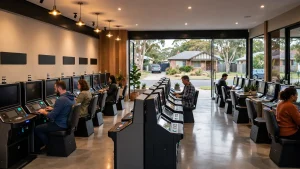
For Australians, “offshore” means an online casino that does not hold an Australian licence. A foreign payment option or a successful connection does not change that status. Nor does a label such as “VPN-compatible”: it may refer to whether the site loads through a VPN, not whether the operator is authorised to provide online casino games to people in Australia.
Bitcoin claims need particular care. Cryptocurrency is not an allowed payment method for gambling in Australia. A website displaying Bitcoin as a deposit option is describing its own payment arrangement; that display does not make the method permissible for Australian gambling. The distinction matters even if the payment page opens or the site appears to accept a deposit.
The same caution applies to claims about compatibility. A casino may load while you are connected through a VPN, yet that says nothing about whether the operator may serve Australian customers. It also does not establish that the casino will treat VPN use as acceptable under its own terms. Access, payment, operator status and account conditions are different matters.
If a site’s wording combines Bitcoin access with VPN use, read each claim narrowly. “Bitcoin accepted” is not evidence of Australian permission. “Works with a VPN” is not evidence of a local licence or endorsement. Treat those phrases as descriptions of the site’s own features, not as assurances about the legal position.
This distinction also helps when a casino’s name appears alongside claims about VPN or Bitcoin support. A search result, payment logo or working webpage cannot verify the operator’s status. What matters is not merely whether a connection or payment option appears to function, but what the claim actually covers—and what it does not. A payment feature is not a licence, and a route to a website is not approval to offer its games in Australia.
The Limits of VPN Access—and the Risks of Bonus Offers
A VPN can change the route your internet traffic takes and may help you get past a network-level block. That is a narrow technical effect, not a check on the business behind the website. A page loading successfully does not establish that an offshore casino is safe, that its claims are reliable or that you will receive money you believe you are owed.
Nor does a VPN guarantee that a site will accept your connection or keep an account available. The operator controls its own access and account systems, and technical access can stop working without warning. Treating a successful connection as proof that everything else is in order confuses two separate questions: whether you can reach a site, and what happens when you use it.
Bonus offers bring another set of risks. A promotion may come with conditions that affect whether a bonus or related winnings can be withdrawn. Read the terms before accepting an offer, rather than relying on its headline description. A specialist review has reported that casinos may detect attempts to open multiple accounts to claim bonuses. If an operator suspects that an account breaches its rules, the offer may not work as expected; a VPN does not settle a disagreement or guarantee that an account will be treated as eligible.

Trying to appear as a different user or location can also make an account harder to resolve if the operator asks questions about access or activity. Keep the focus on the operator’s written terms, and do not assume that changing your connection changes those terms. A VPN is not a substitute for understanding what you are agreeing to.
The practical limit is simple: a VPN can affect network access, but it cannot verify an operator, validate a bonus, promise a withdrawal or remove the risks of using an offshore casino. Those outcomes depend on matters beyond the connection itself.
This article is affiliate-based and includes sponsored links.
A Casino’s VPN Policy Is Not the Same as Network Access
Two separate questions are often bundled together: can a VPN get a connection through an internet provider’s block, and does the casino’s own policy permit access over a VPN? A “yes” to the first does not answer the second.
An internet provider’s block operates at the network level. A VPN can route your connection through its own server and may get around a DNS restriction that prevents the casino’s domain from resolving. That describes what happens between your device and the site; it says nothing about the site’s rules for customers.
A casino sets those rules in its terms and conditions. They may address VPN use, location checks or access from particular places. You need to read the current terms that apply to the specific site rather than assume that a connection working means VPN use is permitted. Nor does a general claim that a casino is “VPN-friendly” establish what its terms say.
How casinos detect VPNs
Many operators use IP geolocation services that can recognise and identify known VPN server addresses, which may lead to the connection being refused even if the ISP block is bypassed.
There is also a practical limit: many casinos use IP geolocation services that can recognise known VPN server addresses. A VPN connection may therefore be identified by the casino even if it has passed an internet provider’s block. The outcome can depend on the site’s checks and the server address; successful access at one point is not evidence of a general policy.
If you are considering a particular casino, look for an explicit statement about VPNs in its own terms or ask the operator for clarification. Do not treat a working connection, a third-party description or the absence of an error message as permission. A site’s technical response is not a substitute for its written rules.
These distinctions matter when looking for casinos that permit VPN connections, or when asking whether a particular named casino allows one. Without a current, specific policy from that operator, there is no sound basis to say that it does. Network access and permission under a casino’s terms are separate matters.

Checking a Named Casino’s VPN Policy Before You Connect
If you are considering using a VPN with Shuffle, do not treat a successful connection as proof that the site permits it. A page loading only shows that the connection reached the site at that moment; it does not confirm the operator’s licence, establish that your account complies with its terms, or guarantee that access will continue.
Casinos may use IP geolocation services that recognise addresses associated with VPN servers. A connection can therefore be identified or refused even when the VPN is active. The result may depend on the address being used, and access working once is not evidence that the operator has approved your setup. Avoid relying on an assumption based on a page loading or an account being accessible.
Before connecting, read the operator’s current terms for any restrictions on VPN use and check whether they explain how location checks affect accounts. If the wording is unclear, ask the operator directly and keep its response. Do not try to work around a restriction: a VPN can change the network route, but it cannot make an operator safe or legal, or replace a meaningful check of who is behind the service.

This publication is affiliate-based and includes sponsored links. That relationship does not establish that any named operator permits VPN connections or is suitable for Australian players. Treat an operator’s own claims as claims to verify, not as proof of its status.
VPN Slots Still Depend on the Site’s Access and Terms
A VPN can change the route your internet traffic takes, but it does not change what an online slot service is offering or the rules that apply to it. Under the Interactive Gambling Act 2001, operators are prohibited from offering online casino games to people in Australia. That includes slots; connecting through a VPN does not alter the location relevant to that restriction.
There is also a practical distinction between a site being reachable and a game being available. Internet service provider (ISP) DNS blocking interferes with domain name resolution: the system that matches a website’s name to the address needed to reach it. If that lookup is blocked, the site may fail to load through your usual connection. A VPN may affect how that network request is handled, but it cannot make the operator’s service lawful or ensure that its slots will open.
Access can still depend on the site’s own controls and terms. A page might load while a game remains unavailable, or the operator may apply restrictions after you sign in. A connection working at one moment is not evidence that access will continue or that the site permits VPN use.
Treat claims about VPN slot access as claims about connectivity, not as assurances about the service behind the page. A VPN does not remove the distinction between reaching a website and the operator being permitted to provide casino games to people in Australia. Nor does a working connection establish that every game or account feature will be accessible.
Can I use a VPN to access offshore casinos?
Yes, a VPN can route your connection around an ISP-level DNS block and mask your Australian IP address. It does not make the casino legal or guarantee that the site will accept your connection.
Is using a VPN for Royal Reels legal in Australia?
The Interactive Gambling Act primarily targets operators and does not explicitly criminalise Australian citizens for playing on offshore sites. Using a VPN does not make it lawful for an offshore operator to offer online casino games to people in Australia.
Can a casino detect that I am using a VPN?
Yes. Many casinos use IP geolocation services that can identify known VPN server addresses.
How long do Royal Reels mirrors last before blocking?
Gambling site mirrors typically last around 3–6 months before being blocked.
What forms of gambling are illegal in Australia?
Online casino operators are prohibited from offering casino games to people living in Australia under the Interactive Gambling Act 2001. Cryptocurrency is also not allowed as a payment method for gambling in Australia.
Which casino licence is best for Australian players?
Australia has no online casino licence, so no foreign licence authorises an operator to offer online casino games to Australians. Malta, Gibraltar, Isle of Man and Alderney licences carry more weight than Curacao licences, but a foreign licence is not Australian approval.
Which licences should the best Australian casino online hold?
There is no Australian online casino licence. Among foreign licences, Malta, Gibraltar, Isle of Man and Alderney licences carry more weight than Curacao licences, but none permits an operator to offer online casino games to Australians.