Current venue information can help separate open premises from operating gaming areas and put payout and online-play claims in context.
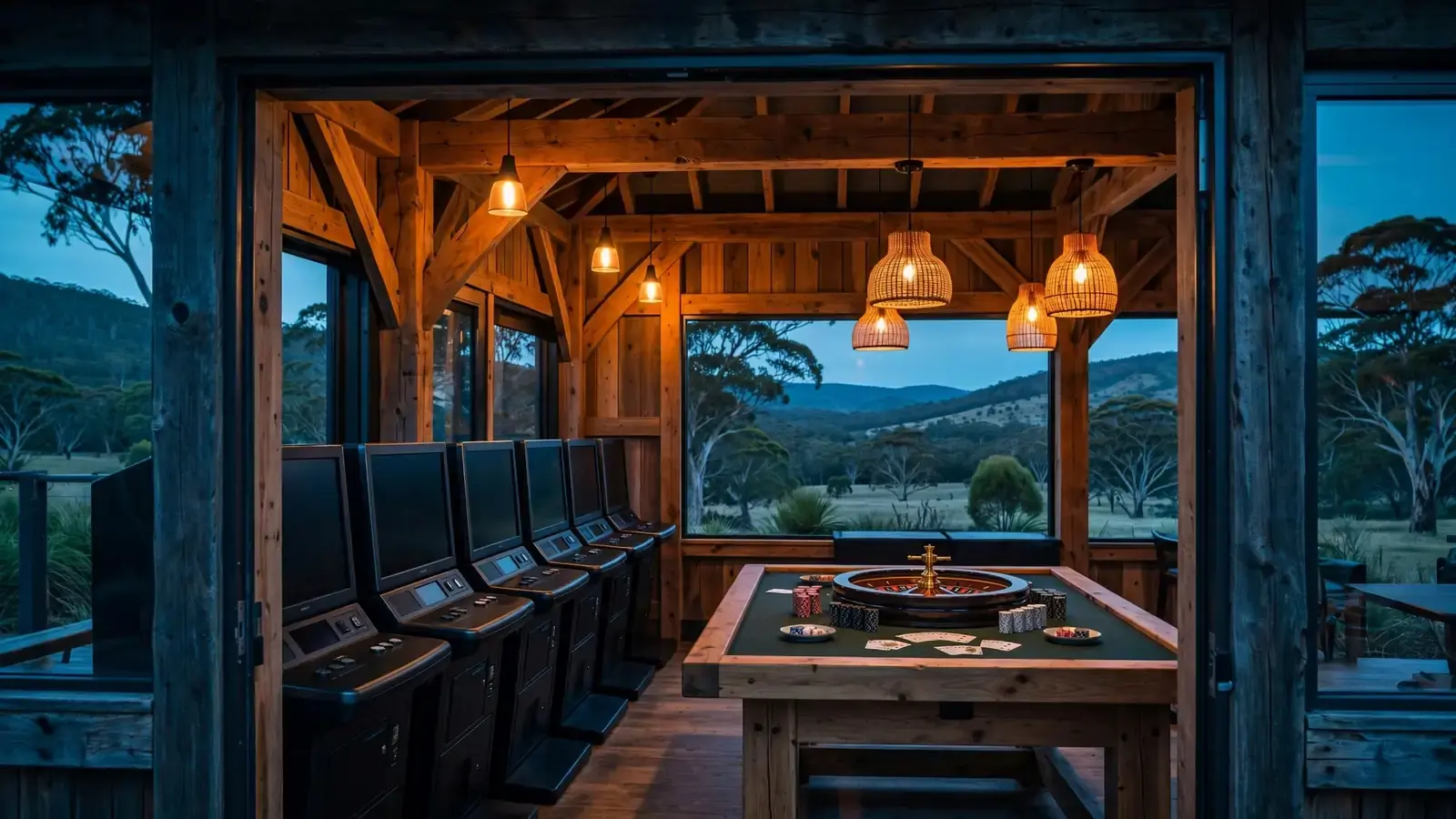
Checking Whether a Venue Is Open
Before setting out, confirm that the venue is open now—not merely that it appears in a directory or has a page describing its usual services. A search result can be useful as a starting point, but it may be old, incomplete or refer to a different part of a business. It does not, by itself, confirm that you can enter and use the pokies when you arrive.
Start with information published by the venue itself. Check its official website or current social media page for a notice about a temporary closure, a change to access or another disruption. Pay attention to when the information was posted: a page with no recent update may describe normal arrangements rather than today’s position. If the venue provides a direct phone number, calling is a more practical check than relying on a listing that may not have been updated.
When you call, be specific about what you need to know. Ask whether the premises are open at the moment and whether the gaming area is operating and accessible to visitors. Those are separate points. A venue may be open for another service while its gaming area is unavailable, or a general listing may say nothing about access to the pokies. A clear answer to both questions is more useful than a broad confirmation that the business is “open”.
Also ask whether any temporary condition could affect your visit. For instance, you can check whether entry is restricted, whether the gaming area is closed for an event or maintenance, or whether the information applies only to a particular part of the venue. These are questions to verify directly, not assumptions to make from a map entry or a search snippet.
If you find conflicting information, give more weight to a recent statement from the venue or a direct response from its staff than to an older third-party listing. If neither is clear, do not treat the uncertainty as confirmation. Try another official contact channel, or wait until the venue can confirm its status. A result labelled “open” may reflect a standard listing rather than a live update; the label can look definite while saying very little about the conditions on the ground.

Check again if there is a significant delay between confirming and travelling. A direct answer is useful for the moment it was given, but circumstances can change. If your plans depend on the gaming area being available, ask the venue to confirm that specific point again before you leave. Keep the check proportionate: you do not need a long exchange, just a current answer about access and operation.
Searches such as “pokies open now in Tasmania” express an immediate need, but the wording of a result is not evidence that a particular venue is open. Likewise, a result referring to early or late access may describe a general schedule, an outdated listing or a different service. For a decision about travelling now, verify present status directly rather than inferring it from a broad description.
Be cautious with names that appear to promise a particular casino or gaming destination. A search mentioning Crown and Tasmania, for example, does not establish that a venue by that name is operating in the state or that pokies are available there. Confirm the exact venue through its own current contact details before relying on a name in a result. If you cannot establish which business the result refers to, do not use it as a basis for a trip.
It can help to keep the check simple: identify the exact venue, consult its own recent update, then contact it if current access is not explicit. Confirm both that the venue is open now and that its pokies are operating and accessible. If you receive only a general answer, ask the narrower question rather than filling in the gap yourself.
This approach avoids two common mix-ups: treating a venue’s general presence online as proof of immediate access, and treating the opening of the premises as proof that the gaming area is available. When you cannot get a current, direct confirmation, the honest answer is that the status remains uncertain. A few minutes spent checking is less costly than travelling on the strength of a stale listing.
What “Best Paying” Can—and Cannot—Tell You
If you’re looking for pokies options in Tasmania in 2026, checking the available operator details can help you decide what to explore. Use this list as a starting point and review the terms that apply to you.
-
LuckyVibe
- License
- Curacao Gaming Control Board OGL/2023/176/0095 (Hollycorn N.V.)
LuckyVibe lists a Curacao Gaming Control Board licence, OGL/2023/176/0095, held by Hollycorn N.V.
-
Lucky Dreams
- License
- Curacao
- Min. deposit
- A$20 (POLi)
Lucky Dreams lists a Curacao licence and a minimum deposit of A$20 via POLi.
-
LevelUp Casino
- License
- Curacao eGaming OGL/2023/174/0082 (Dama N.V.)
- Min. deposit
- A$15
LevelUp Casino lists a Curacao eGaming licence, OGL/2023/174/0082, held by Dama N.V. Its stated minimum deposit is A$15.
-
Playfina Casino
- License
- Curacao eGaming (Hollycorn N.V., since 2017)
- Min. deposit
- A$20-30 (depends on the offer)
Playfina Casino lists a Curacao eGaming licence held by Hollycorn N.V. since 2017. Its minimum deposit is A$20–30, depending on the offer.
-
SpinsUp
- License
- Curacao Gaming Control Board OGL/2023/174/0082 (Dama N.V.)
SpinsUp lists a Curacao Gaming Control Board licence, OGL/2023/174/0082, held by Dama N.V.
-
Vegaz Casino
- License
- Curacao OGL/2024/1335/0780
- Min. deposit
- EUR 20
Vegaz Casino lists a Curacao licence, OGL/2024/1335/0780, and a minimum deposit of EUR 20.
-
Bizzo Casino
- License
- Curacao Gaming Control Board (TechSolutions Group N.V.)
Bizzo Casino lists a Curacao Gaming Control Board licence held by TechSolutions Group N.V.
-
JustCasino
- License
- Curacao Gaming Control Board
JustCasino lists a Curacao Gaming Control Board licence. That is the available detail to consider when assessing this option.
-
Kingmaker
- Payout speed
- crypto ~90 minutes, fiat 1-5 days
- Min. deposit
- A$30
Kingmaker lists a minimum deposit of A$30. Its stated payout speed is about 90 minutes for crypto and 1–5 days for fiat.
-
Roby Casino
- License
- Curacao eGaming (Roby Games Ltd)
Roby Casino lists a Curacao eGaming licence held by Roby Games Ltd.
A label such as “best paying” sounds like a comparison based on results, but a game’s title or reputation cannot tell you what return setting is in use at a particular venue. Even when the same pokie appears in more than one place, its settings may not be identical. A specialist review reports that some providers let casinos choose between multiple return-to-player (RTP) settings for a given game. RTP is the theoretical return setting associated with a game, not a promise about what a player will receive.
That distinction matters when you compare claims about Tasmanian casino pokies. A name that appears on a list of highly rated or “high paying” games does not establish the setting selected by a specific casino, club or other venue. Nor does it show that the game is configured the same way elsewhere. Unless a claim identifies the relevant setting and where it applies, the ranking may tell you little about the version you could encounter.
- RTP
-
Return-to-Player (RTP) is the theoretical return setting associated with a game, rather than a promise of what a player will actually receive.
A venue-specific claim needs venue-specific support. General descriptions of a game, promotional language and player recollections are not substitutes for details about the setting in use. If a source names a game but gives no evidence tying its stated return to a particular venue, treat the claim as a description of the game in general—not as proof of its return in Tasmania.
Even a published RTP figure, where one is available, needs careful interpretation. It describes a theoretical return over play, not a forecast for your session or a guarantee of a particular result. It cannot tell you what will happen on the next spin, or how a short run of play will compare with the theoretical figure. A percentage without clear context can create a false impression of precision: first establish which version and setting it refers to, then consider what the figure actually describes.
The outcome of each spin is generated independently through a Random Number Generator, or RNG. In practical terms, the result of one spin does not make a particular result more or less due on the next one. A recent win, a long stretch without one, or a story about a machine paying out does not provide a reliable signal about the next outcome. Past results are not a forecast.
This is why a game’s reputation should not be confused with evidence about a particular machine or venue. Stories from other players may describe what happened to them, but they cannot establish an RTP setting or predict your own results. Likewise, a game’s popularity says something about its recognition, not whether it offers a higher return at a venue in Tasmania.
When you read a “best paying pokies” claim, separate three things: the game being discussed, the setting the claim refers to, and the evidence for that setting at the venue in question. If one of those is absent, the claim cannot support a venue-level comparison. Be especially wary of wording that turns a theoretical return into a promise of regular wins, or suggests that a game becomes more likely to pay after a losing run. Neither conclusion follows from the information a title or reputation provides.
Do
- Separate the game name from the setting and evidence
- Look for explicit explanations of the setting and scope
- Distinguish theoretical return from individual outcomes
Don't
- Treat a theoretical return as a promise of regular wins
- Assume a game pays more after a losing run
- Rely on a game's popularity as evidence of higher returns
This also limits what can responsibly be said about the best pokies in Tasmania. Without reliable, venue-specific information about settings, a ranked list would imply more certainty than the available evidence supports. A label such as “best” may reflect taste, familiarity or a source’s own criteria; it does not, by itself, establish a higher return at a Tasmanian venue.
For a useful comparison, look for an explicit explanation of the setting and the scope of the claim. Check whether it refers to a particular venue or merely to a game in general, and whether the source distinguishes theoretical return from individual outcomes. If it does not, read the claim narrowly. A title can identify a pokie; it cannot tell you how a particular session will go.
Choosing a Venue by Location, Not Assumption
A venue that sounds close on a map may be awkward to reach in practice. If you are looking for pokies near an airport, first identify the exact airport and the venue address you intend to check. “Tasmania airport” is not a precise destination: a broad search can return results that are difficult to compare or that do not answer whether a particular venue is nearby.

Use a map to compare the full route, not just the apparent distance between two pins. A short straight-line distance can still involve an indirect road journey or an inconvenient connection. Check the route from the airport to the venue using the transport you will actually have, and confirm that the address belongs to the venue rather than to a nearby shopping area or suburb. If the trip depends on public transport, check the relevant service information separately; a map estimate alone does not establish that a suitable connection is available.
The same care helps when you want to find pokies near the CBD. Confirm which city centre you mean, then compare the venue’s listed address with your starting point. A result labelled “CBD” may refer to a broad area rather than a building close to the streets you plan to visit. Look for an address that can be matched across the venue’s own information and a current map listing. If those details differ, contact the venue before setting out rather than choosing whichever location appears most convenient.
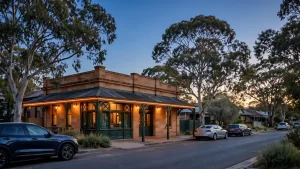
For travel elsewhere in the state, be equally specific. A broad search for a northern Tasmanian venue, for example, may cover a large area. Narrow it by the town or suburb you will be travelling from, then check the route and the destination address. If you are comparing options, use the same starting point and transport method for each. That makes the comparison useful without turning a vague label such as “nearby” into a promise about travel time.
A “near me” result is a starting point, not confirmation. Location services can be imprecise, and listings can be incomplete or out of date. Check that the result identifies the venue itself and that its address matches what you intend to visit. If you are travelling a long way, a direct call can resolve a mismatch before it becomes an unnecessary trip. The venue can confirm its address; route planners can help you assess the journey. Those are separate checks.
Keep location research separate from questions about venue oversight. A map listing, an address or a claim that a venue is close to the CBD does not tell you how many gaming machines it has or what responsibilities apply there. Those are venue-level matters, not features that can be inferred from its position. In the same way, proximity to an airport does not establish that a venue is inside the airport or that pokies are available there.
The practical test is simple: identify the place you mean, verify the venue’s address, and assess the route from your actual starting point. Treat broad labels and map pins as leads to check, not as evidence of a particular location or distance.
Venue Reporting and Responsible-Gambling Duties
A venue’s machine count can matter for more than describing its size. A report by regionriverina.com.au outlines additional responsible-gambling duties for venues above the stated threshold: from 1 July, a venue operating more than 20 gaming machines is to have a dedicated responsible gambling officer (RGO) on duty whenever those machines are running. The report also describes a one-month grace period for venues to introduce the officer role and remove signage.

The RGO requirement is tied to machine operation, not simply to whether the venue’s doors are open. That distinction matters when considering what oversight is meant to cover: the officer is required while the machines are operating. The report does not make the role a measure of whether a venue is “best”, nor does compliance by itself tell you what your experience there will be.
A further duty described in the report is keeping a gambling incident register. It is intended to record occurrences, including situations in which a patron’s behaviour suggests they may be at risk of gambling harm or already affected by it. That makes the register a record of incidents, rather than a public scorecard for comparing venues.
For someone weighing up Tasmanian venues, these requirements offer a more useful frame than an unsupported ranking. A venue’s size and its responsible-gambling arrangements are separate questions: the threshold determines whether the described officer requirement applies, while the register concerns the recording of relevant occurrences. Neither establishes that one venue has better pokies or is a better choice for every visitor.
The details also have limits. The report describes requirements and a transition period; it is not a directory of Tasmanian venues, and it does not identify which local venues meet the machine threshold. A search for the best pokies venue in Tasmania therefore cannot be answered by treating these duties as a league table. They concern oversight, not game returns, location or the quality of a particular venue.
If you are checking a venue’s arrangements, keep the questions specific: whether it operates more than 20 machines, whether the RGO duty applies while those machines are running, and whether the venue is maintaining the incident register described in the report. Those checks can clarify the responsibilities attached to a venue. They do not turn a regulatory requirement into a recommendation, and they should not be mistaken for evidence that a particular venue is superior to another.
Responsible Gambling Duties
Venues operating more than 20 gaming machines must have a dedicated responsible gambling officer (RGO) on duty while machines are running and maintain a gambling incident register.
Online Play, the Ferry and Unverified Casino Searches
A search for pokies on the Spirit of Tasmania does not establish that the ferry has gaming machines or offers gambling. Treat the vessel’s name and the word “pokies” as a question to verify, not as evidence of an onboard service. If you need to know what is available during a crossing, check information published by the ferry operator or ask it directly. Do not rely on a search result that simply combines the two terms.
The same caution applies to searches that pair Tasmania with Crown and pokies. A name in a search phrase does not confirm that a casino with that name operates in Tasmania, or that it offers gaming machines there. Before making plans around any named venue, establish that the venue itself exists and confirm its details through an official source. A familiar casino brand elsewhere is not proof of a Tasmanian location.
Online play is a separate issue from what might be available aboard a ferry or at a physical venue. Under the Interactive Gambling Act 2001, operators cannot lawfully provide real-money online pokies to people in Australia. No Australian-licensed online casino exists. That means a site presenting itself as an option for real-money online pokies in Tasmania is not made lawful by using local wording, offering a bonus or accepting a deposit.
“No deposit” offers do not change that position. Promotional language may make an online offer sound cost-free, but it does not establish that the operator is authorised to serve Australian players. Nor does a site’s claim about its own status make it an Australian-licensed casino. There is no such domestic online casino licence.
The practical risk is not limited to whether a site will let you register or play. If an offshore casino refuses to pay your winnings, you have no legal recourse in Australia to recover them. A site may appear accessible and still leave you without an Australian route to enforce a payment claim. That is an important distinction: access to a website is not the same as protection under Australian law.
Keep these questions separate when checking an offer: is it a real, identifiable ferry or venue service, or an online operator; and, if it is online, what protection would you have if a dispute arose? A name, a bonus headline or a working webpage cannot answer those questions by itself. For the ferry and any named physical venue, seek confirmation from the operator or venue. For real-money online pokies, the central point is that there is no Australian-licensed casino, and offshore access does not provide Australian legal recourse over unpaid winnings.
Why a Search for 24-Hour Pokies Needs a Current Check
A venue’s usual operating hours and whether it is open right now are different questions. A listing that describes late-night or all-night access may not reflect a change to today’s schedule. Conversely, a venue that is open now may not keep its gaming area available through the night.
For anyone looking for 24-hour pokies in Tasmania, the practical issue is confirmation, not assumption. It would therefore be misleading to treat “24-hour” as a confirmed feature or to plan a trip around an unverified timetable.
All-night access is not the same as “open now”
“Open now” is time-sensitive: it asks whether a particular venue is operating at the moment you intend to arrive. “Open 24 hours” makes a broader claim about continuous access across the day and night. One does not prove the other. A venue may be open at the time you check without operating overnight, and a general description of extended hours does not establish that its gaming machines are available at every hour.
Before travelling, look for a current notice from the venue and check that it refers to the relevant date and the gaming area, not just another part of the premises. If the information is unclear or undated, contact the venue directly and ask whether pokies are available at the time you plan to visit. A general business-hours listing may not answer that specific question.
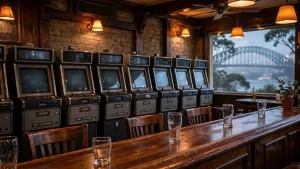
Treat published hours as a detail to confirm
Hours can change, and information copied between directories may remain visible after it is out of date. Check the venue’s own recent updates where available, then confirm directly if the trip depends on late-night access. Pay attention to the difference between the venue being open and pokies being in operation; those descriptions are not interchangeable.
If you cannot confirm the schedule, avoid making a long journey on the assumption that machines will be accessible. That is particularly important when an all-night visit is the reason for choosing a venue. A current confirmation can answer the immediate question, but it should not be stretched into a general claim that the venue operates around the clock.
The same care applies when comparing stated opening hours. Check the specific venue close to your planned visit, and treat any broad claim of 24-hour access as unconfirmed until the venue itself verifies it.
How to Read Claims About Tasmanian Pokies
A confident label such as “best” does not tell you what was measured. It might refer to a particular feature, a published return figure or simply someone’s preference. Before relying on a claim about pokies in Tasmania, look for its basis: who made it, what information they used, and whether it applies to the specific game and setting being discussed.
Return to player, or RTP, is a theoretical measure of how much a game returns across many plays. It is not a forecast of what you will receive in a session, and it does not identify a likely outcome for your next spin. A specialist review reports that some providers let casinos choose between different RTP settings for the same pokie. That means a figure attached to a game name may not describe the setting used at every casino. If a claim gives no venue-specific context, treat it as incomplete rather than as a Tasmanian guarantee.
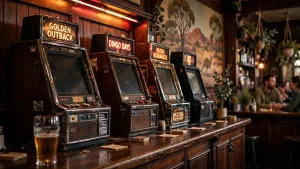
Individual results are uncertain for a separate reason. A Random Number Generator determines each spin, so one result does not make a win or loss more likely on the next spin. A run of losses is not evidence that a machine is “due”; a recent win does not establish that another is less likely, either. Past outcomes can make a story persuasive, but they do not predict the next result.
Claims about maximum bets and cash payouts need equally careful reading. A maximum bet describes a permitted stake, not a measure of how often a game pays or how much a player will collect. A stated maximum payout, if one is quoted, needs context: check whether it refers to a single result, whether conditions apply, and which game configuration it covers. Without those details, a large figure may say little about the experience a player can expect. It is not evidence of a likely win.
When a claim names a particular pokie as the best, separate the label from the evidence. Look for a clearly identified RTP setting, the casino or configuration to which it applies, and an explanation of what “best” means. If those details are absent, you cannot reliably compare the claim with another one. Even a well-documented return figure describes long-run behaviour, not a promise to an individual player.
This is a practical way to assess claims about pokies, whether they concern a venue in Tasmania or a game someone has recommended. Keep the scope of the evidence in view: game name alone does not establish the setting, and a published setting does not tell you what will happen in your next spin.
Online Pokies and the Limits of Australian Protection
Tasmania’s location does not create a separate legal route to real-money online pokies. The Interactive Gambling Act 2001 applies across Australia: it makes it illegal for companies to provide these games to Australian residents without a domestic licence. No such licences have been issued, and there is no Australian-licensed online casino.

That distinction matters when you consider claims about online play from Tasmania, whether they refer to nearby access, high-limit games or supposedly better-paying options. A site’s willingness to accept Australian customers does not mean it holds an Australian licence or that Australian protections apply to it. The law’s focus is the operator offering the service, not the person playing.
Australians are not made criminals simply for playing on an offshore site that accepts them. But the absence of player liability should not be mistaken for a safety net. If an offshore casino refuses to pay winnings, Australian players have no legal recourse in Australia to recover them. In practical terms, a dispute may leave you without an effective local route to enforce the site’s promises.
The difference is easy to miss: an operator can be acting unlawfully by offering the service, while an individual player is not committing an offence merely by taking part. That does not make the arrangement equivalent to a locally licensed service. There is no Australian online-casino licence against which to check an operator, and no domestic licensing framework for such a site to answer to.
Treat claims of legal protection cautiously. A site may describe its own terms, customer support or dispute process, but those statements do not create Australian legal recourse if it withholds a payout. Nor does a polished presentation alter the underlying legal position. The inconvenient point is that a player can face the practical risk of losing access to winnings even when the law does not punish the player for having played.
If you encounter an online offer presented as a Tasmanian or Australian casino, separate the location language from the legal status. A reference to Tasmania does not establish that the operator is licensed here. For real-money online casino games, there is no Australian-licensed option; offshore sites that accept Australians operate outside that domestic protection.
Legal Risk
There is no Australian-licensed online casino; if an offshore operator refuses to pay your winnings, you have no legal recourse in Australia to recover them.
CBD Clubs and the Information You Can Verify
A club’s CBD address does not tell you whether it has pokies, how many machines it operates or what games are available. Those are venue-specific details. Treat a listing, an old review or a broad claim about Tasmanian clubs as a lead to check, not as confirmation about a particular venue. If machine availability matters to your plans, ask the club directly and make sure the answer refers to the venue and date you have in mind.
The same caution applies to claims about the “best” pokies in central Hobart or another Tasmanian CBD. A club name or a machine count cannot establish what a game will return to players. Nor does a general description of a venue amount to a current inventory.
There is a useful distinction between individual venue details and reporting requirements that apply by machine threshold. A report by regionriverina.com.au says that, from 1 July, venues operating more than 20 gaming machines are required to have a dedicated responsible gambling officer (RGO) present while those machines are running. It also describes a requirement for venues to keep a gambling incident register, including records of occasions when a patron’s behaviour suggests gambling harm may be affecting them or may be a risk.
Those obligations do not establish how many machines a particular CBD club has, whether it falls above the threshold, or what facilities it offers. They are not a substitute for venue-specific information. If you are checking a club’s published material, look for details tied to that club rather than inferring them from the rules that apply to larger machine venues.
If you are considering self-exclusion, treat it as a separate question from which clubs have pokies. Self-exclusion is a responsible-gambling tool, but a general mention of it does not tell you how a particular venue handles enquiries or what steps apply there. Contact the relevant venue or service for current, specific instructions before relying on an assumption.
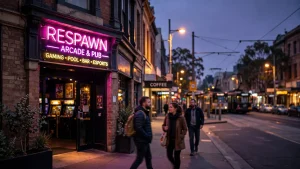
The practical limit is straightforward: broad statements about Tasmanian clubs may describe a category, but they cannot confirm a CBD club’s machines, threshold status or arrangements. For those details, seek information that names the venue and is current.
Cashless Play and Searches Beyond Tasmania
A cashless pokies setup is a venue-level arrangement. The term can mean different things, from paying at a machine without notes or coins to using a venue account or another payment method. Do not assume a particular arrangement is available simply because a venue or machine is described as cashless. Before making a trip, ask the venue what the process involves, which machines it applies to and whether any conditions apply.
PayID is not evidence of cashless machine access. It is a way to transfer money using an email address, mobile number or ABN linked to the New Payments Platform. That describes a bank transfer; it does not establish that a Tasmanian venue accepts PayID at its pokies, or that a website offering PayID is licensed to provide online gambling. Payment convenience and legal status are separate matters.
The distinction matters because real-money online casino games cannot lawfully be provided to people in Australia by operators without a domestic licence, and no Australian-licensed online casino exists. PayID support does not change that position. It also says nothing about a machine’s return settings or likely results.
A reference to “Newcastle, Tasmania” deserves a careful location check before you rely on it. Confirm the venue’s full address and the state or territory shown in its own current contact details; a place-name match alone is not enough to plan a journey. Then contact the venue directly about its machines and payment arrangements. Do not treat a directory entry, an old listing or a payment logo as confirmation of what is available on site.
If cashless play matters to your decision, get a clear answer about how money is loaded, how balances are handled and what alternatives are available. If the venue cannot explain the arrangement plainly, avoid treating it as confirmed.
Can casinos change the RTP of their games?
Yes, some game providers let casinos choose from multiple RTP settings for the same pokie. A game’s title or general RTP claim does not confirm which setting a particular venue uses.
What is the cost-benefit calculation of casino promotions?
Compare the wagering requirement and any cash-out cap with the bonus value before accepting an offer. For example, a $500 bonus with a 40x requirement means $20,000 in bets before you can withdraw winnings; if the requirement applies to a $500 deposit plus a $500 bonus at 35x, it means $35,000 in bets.
What does “wagering requirement” actually mean?
It is the turnover multiplier that tells you how much you must bet before bonus-related winnings can be withdrawn. For example, a 40x requirement on a $500 bonus means betting $20,000; requirements above 40x are particularly punishing.